+86-18815018869
  josie@one-paper.com
+86-18815018869
josie@one-paper.com
josie@one-paper.com
+86-18815018869
josie@one-paper.com
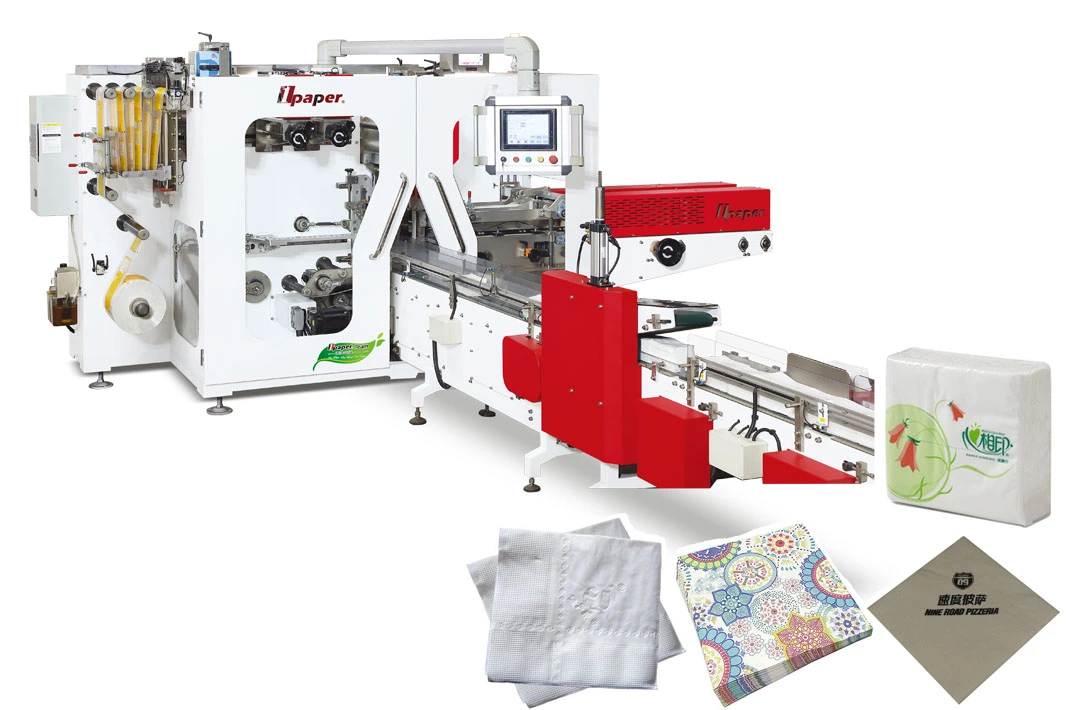
The napkin packing machine is a pivotal component in the napkin production line, designed to automate the wrapping process. It encases folded napkins in protective packaging, maintaining their cleanliness and enhancing their retail appeal. This napkin paper packing machine streamlines operations, significantly increasing throughput while ensuring the product meets stringent hygiene standards— a core requirement for both the napkin packing machine and sanitary napkin packing machine.
Maintaining your napkin packing machine is crucial for ensuring optimal performance, longevity, and minimizing downtime. Regular maintenance checks can prevent unexpected breakdowns and ensure the napkin paper packing machine operates at peak efficiency. Here are some essential tips:
Daily Cleaning: Dust and debris can accumulate and interfere with the machine’s functionality. Daily cleaning of accessible parts helps maintain its condition and performance.
Lubrication: Regular lubrication of the automatic napkin making machine’s moving parts is essential to reduce friction, wear, and tear. Use the recommended lubricants and follow the manufacturer’s schedule and guidelines.
Inspect and Replace Worn Parts: Regular inspection of critical components such as belts, gears, and bearings can help identify wear and tear early. Replace these parts as needed to prevent machine failure.
Software Updates: For machines with digital controls or automation, ensure that the software is up to date. Software updates can improve efficiency and add new features.
Professional Servicing: Schedule annual or bi-annual professional servicing to check electrical systems, calibrate the napkin machine, and perform deep cleaning. Professionals can also identify issues that may not be apparent during daily checks.
Training: Ensure that operators are properly trained in both operation and basic maintenance procedures. This can prevent misuse and recognize early signs of potential problems.
By following these maintenance tips, you can extend the life of your sanitary napkin packing machine, maintain high-quality packing standards, and save on costly repairs or replacements in the long run. Proper care and maintenance of your napkin packing machine will ensure it continues to operate efficiently and reliably, meeting your production needs.
Upgrading to a high-speed napkin packing machine offers numerous benefits that can significantly enhance the efficiency and profitability of your production line. Firstly, it dramatically increases production speed, enabling you to meet higher demand volumes with ease and reliability. This efficiency can lead to a substantial boost in output, allowing your business to fulfill larger orders and potentially expand into new markets.
Moreover, high-speed machines often incorporate advanced technology that improves packing accuracy and consistency, reducing waste and ensuring that each product meets quality standards. This precision not only enhances the product’s presentation but also minimizes material costs over time.
Additionally, these modern machines typically feature better energy efficiency, which can lower operational costs. Their automation capabilities reduce the need for manual labor, allowing your workforce to focus on other critical areas of production and quality control.
Finally, investing in a high-speed napkin packing machine can provide a competitive edge in the marketplace, showcasing your commitment to leveraging cutting-edge technology for superior product quality and efficiency.
Choosing the best napkin packaging machine starts with understanding the categories that matter for capacity planning, staffing, and SKU strategy.
Semi-automatic machines typically require more operator involvement (feeding, positioning, or assisting pack transfer). They can be cost-effective for:
smaller factories,
frequent SKU changes,
lower daily operating hours.
Full-automatic napkin packing machines reduce touchpoints and improve stability at high speeds. They’re often preferred when:
labor is expensive or inconsistent,
hygiene standards are strict,
the line runs long shifts,
you need predictable output for distributors.
Rule of thumb: if your business plan depends on scaling volume without scaling headcount, full automation is usually the faster payback.
Different markets favor different formats:
Single-pack: common for convenience retail, food service, export cartons.
Multi-pack/bundles: popular for supermarkets, family-size value packs, promotions.
If your product strategy includes both, confirm the machine supports:
adjustable pack length/width/height ranges,
quick changeover parts,
stable sealing across multiple film thicknesses.
Search intent can be confusing here, so let’s be precise:
A napkin packing machine (paper/tissue napkins) handles folded paper napkins, often in stacks, and uses film wrapping + sealing optimized for paper bulk and compression.
A sanitary napkin packing machine is designed for feminine hygiene products, typically involving different feeding methods, product orientation, sealing requirements, and hygiene standards, and may integrate with different upstream equipment (core forming, pad wrapping, etc.).
If your product is paper napkins, you’ll want a tissue-focused napkin paper packing machine—not a sanitary napkin solution.
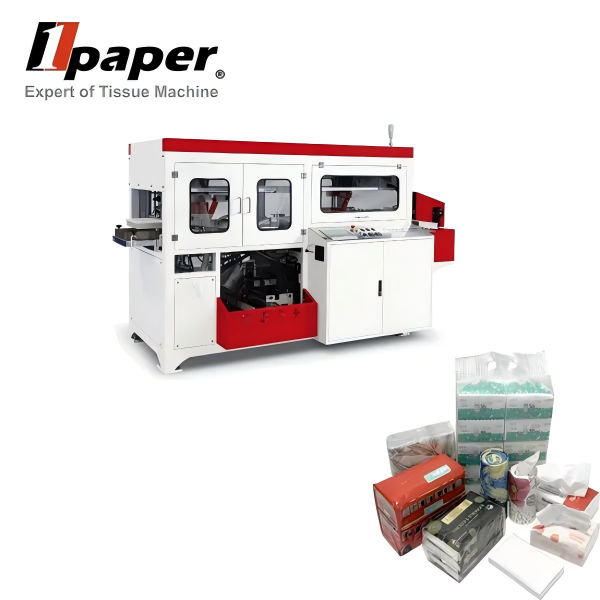
When evaluating a napkin paper packing machine, specs matter—but only the specs that protect uptime and pack quality.
A high-quality napkin packing machine typically uses a PLC control system for stable logic control, alarm management, and repeatable changeovers. Many factories prefer widely supported ecosystems such as Siemens or Omron because:
technicians are easier to hire/train,
replacement components are easier to source,
diagnostics and fault tracing are faster.
What to ask the supplier:
Which PLC/HMI brand and model?
Is the program backed up and transferable?
What alarms are included by default (film break, misfeed, seal temp error, etc.)?
The best napkin packaging machine is flexible on film options, commonly including:
PE film (often forgiving, good for many markets),
OPP film (clarity, presentation),
CPP film (sealing performance in specific use cases).
Practical point: confirm sealing stability at your target speed with your target film—especially if you plan to switch suppliers or film thickness.
Speed is usually measured in packs per minute (PPM). But in real factories, “fast” means:
stable counting/stack control,
consistent seals,
low jam rates,
minimal film waste during splicing/changeover.
When comparing machines, ask for performance references under conditions similar to yours:
napkin ply and thickness,
fold type and stack height,
pack size,
film type and thickness,
working hours per day.
A napkin packing machine isn’t just about speed—it’s about running a predictable, scalable operation.
Automation reduces manual handling, helping you improve cleanliness and reduce contamination risk—especially important when supplying food service and hospitality channels.
Precision film feeding and stable sealing reduce:
short packs and re-seals,
film wrinkles that trigger rejects,
excessive film usage from poor tension control.
Uniform pack appearance can increase buyer confidence and reduce retailer complaints. Consistency also improves carton loading and shipping stability downstream.
High uptime comes from simple daily habits. A reliable napkin packing machine still needs routine care—especially in dusty paper environments.
In many packing lines, the most frequently serviced components include:
sealing jaws/heating elements (and related insulation),
belts and rollers (wear, dust buildup, alignment),
cutting blades (seal-cut consistency),
sensors (dust interference, misalignment),
bearings in high-motion assemblies.
Keep critical spares on-site to prevent waiting on shipping during peak demand.
Daily
Clean dust from sensors, guides, and film path areas
Inspect sealing area for residue buildup
Check air pressure (if pneumatic components are used)
Confirm film tension and tracking are stable
Weekly
Inspect belts/rollers for wear and alignment
Check fasteners on vibration-prone assemblies
Verify sealing temperature stability and consistency
Lubricate points as recommended by the manufacturer manual
Operator habit that prevents downtime: log every jam cause (film splice, static, misfeed, stack deformation). Patterns show up quickly—and fixes become obvious.
| Feature | Manual Packaging | Semi-Automatic | Full-Automatic Napkin Packing Machine |
|---|---|---|---|
| Labor dependence | Very high | Medium | Low |
| Speed consistency | Low | Medium | High |
| Pack appearance consistency | Variable | Improved | High (shelf-ready) |
| Hygiene control | Low | Medium | High (fewer touchpoints) |
| Waste/rework risk | Higher | Medium | Lower |
| Best for | Very small output | Growing operations | Scaling + high output lines |
Speed is typically measured in packs per minute (PPM) and depends on pack size, napkin thickness, fold style, and film type. Ask suppliers for validated PPM under conditions similar to your SKUs—not just maximum speed.
Space depends on machine layout, infeed/outfeed conveyors, film handling area, and carton packing needs. Request a footprint drawing and plan additional clearance for maintenance access and operator movement.
Many modern machines support size ranges via adjustable guides and change parts. Confirm the supported length/width/height range, changeover time, and whether tooling is quick-release or requires mechanical re-alignment.