+86-18815018869
  josie@one-paper.com
+86-18815018869
josie@one-paper.com
josie@one-paper.com
+86-18815018869
josie@one-paper.com
If you’re evaluating a facial tissue bundle packing machine, the real question is rarely “Can it run fast?” It’s: Will it pay back quickly and reliably under real plant conditions—your SKUs, your staffing model, your uptime, your quality requirements?
This guide walks through a practical, auditable ROI method (not a hype number), shows a transparent payback example, and provides a checklist you can use to validate the assumptions before you invest.
When manufacturers say a machine “pays for itself,” they’re typically describing payback period—how long it takes for the cash benefits (savings + added profit) to equal the total installed cost.
Payback period answers: When do we recover our investment?
ROI (%) answers: How big is the annual return relative to the investment?
IRR/NPV answers: What’s the time value of money and long-term value? (Useful, but payback is usually the first screening metric.)
An 18-month payback is often achievable when one or more of these are true:
Your current bundling is labor-heavy (manual or semi-auto)
You’re throughput constrained and losing production time to stops/jams
Bundle quality issues cause rework/scrap or downstream disruptions
Changeovers are frequent and slow
Your lines run multiple shifts (more hours = faster payback)

Before calculating ROI, capture your current state. Even a 2–4 week time study gives you defensible numbers.
Track these by SKU family if possible:
Bundles/hour (or packs/min converted to bundles/hour)
Operators per shift dedicated to bundling (and any helper time)
Uptime or OEE (or at least “unplanned downtime minutes per shift”)
Scrap/rework rate (bundle failures, film tears, miscounts, poor presentation)
Changeover time (average minutes per change, number of changes per week)
Maintenance hours (planned and unplanned)
ROI models fail when they start with “the machine can run X speed” rather than “our line consistently produces Y output.” Payback is driven by sustained output, not nameplate speed.
A modern high-speed facial tissue bundle packing machine can improve ROI through consistent bundling, repeatable counting/compression, and better line stability—especially when integrated properly with upstream and downstream equipment.
Typical operational improvements include:
More consistent bundle quality (fewer rejects and customer complaints)
Fewer micro-stops (feeding/counting issues, film handling issues)
Higher sustained throughput with less variability
Reduced direct labor at the bundling station
Faster, more repeatable changeovers (when change parts and procedures are designed well)
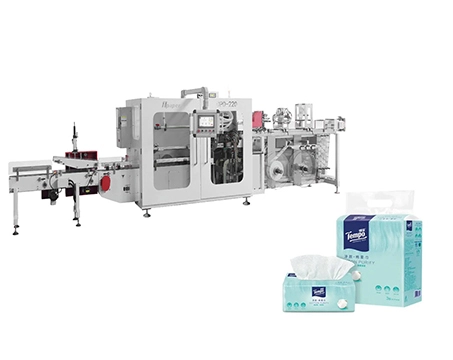
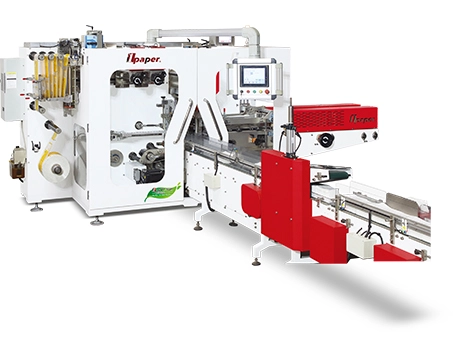
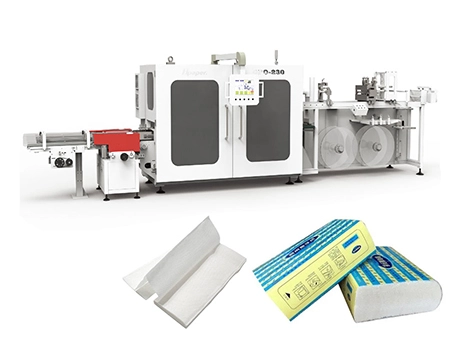
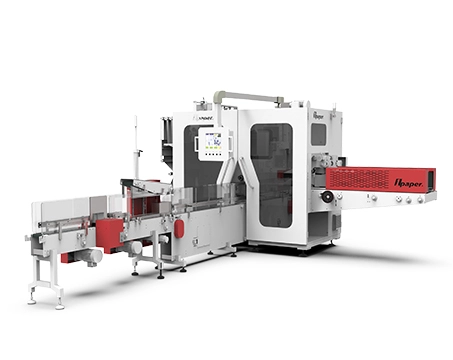
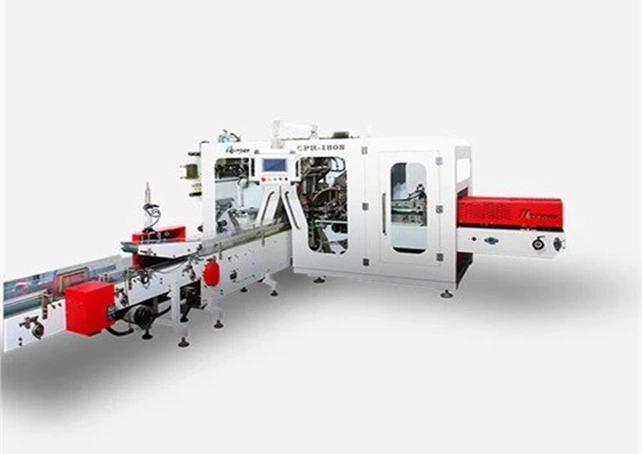
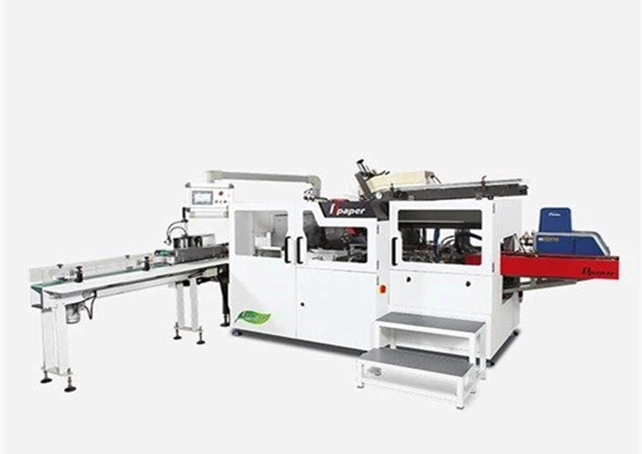
If you’re comparing equipment options, start with the configuration and formats that match your product mix (bundle size, pack style, tissue type, and line layout). For reference specs and configuration options, view 1paper's facial tissue packing machines here.
To keep the ROI model credible, separate:
Total Installed Cost (what you truly spend to get into production)
Annual Net Benefit (what you truly gain each year)
Annual net benefit
= (labor savings + profit from added capacity + material savings + scrap reduction + downtime reduction)
− (added utilities + additional maintenance + consumables)
Payback period (months)
= (Total installed cost / Annual net benefit) × 12
ROI (%)
= (Annual net benefit / Total installed cost) × 100
Don’t model ROI using only the machine quote. A realistic TIC often includes:
Machine price + options (counting, compression, bundle styles)
Shipping, installation, commissioning, operator training
Electrical/air drops, guarding, safety validation
Infeed/outfeed conveyors and accumulation (often underestimated)
Change parts/tooling for your SKU range
Spares kit for critical wear parts
Any planned downtime cost for install/start-up (if applicable)
Below is an illustrative example with conservative logic. You should replace the inputs with your actual data from the baseline study.
Important: These numbers are not universal “promises.” They show how to structure the math and which assumptions drive payback.
Operating schedule
2 shifts/day
5 days/week
50 weeks/year
Annual operating shifts: 2 × 5 × 50 = 500 shifts/year
Labor
Current bundling staffing: 2 operators/shift
New machine staffing: 1 operator/shift
Loaded labor cost (wages + burden): $30/hour
Shift length: 8 hours
Throughput / capacity
Improvement shows up mainly as reduced downtime and fewer stops, yielding additional sellable output without adding shifts
Added contribution margin (profit) attributed to additional output: $250 per shift
(This is where you should use your margin per case/bundle and your realistic incremental volume.)
Quality & scrap
Reduction in scrap/rework cost: $50 per shift
(film waste + product rework time + downstream disruption)
Costs to maintain the new system
Additional maintenance/consumables: $10,000 per year
Total installed cost (TIC)
Machine + install + integration + training + change parts: $250,000
Operator reduction: 1 operator/shift
Annual hours saved: 500 shifts × 8 hours = 4,000 hours/year
Labor savings: 4,000 × $30 = $120,000/year
Added contribution per shift: $250
Annual gain: 500 × $250 = $125,000/year
Savings per shift: $50
Annual gain: 500 × $50 = $25,000/year
Total gross benefit: 120,000 + 125,000 + 25,000 = $270,000/year
Less added maintenance/consumables: 270,000 − 10,000 = $260,000/year
Payback = (250,000 / 260,000) × 12
Payback ≈ 11.5 months
So why do many teams still plan around 18 months? Because real-world adoption usually includes ramp-up, SKU complexity, and conservative utilization. If you apply a “ramp factor” (for example, only 65% of modeled benefits achieved in year 1 due to learning curve and integration tuning), payback moves:
Adjusted annual net benefit (ramped) = 260,000 × .65 = $169,000/year
Payback = (250,000 / 169,000) × 12 ≈ 17.8 months
That’s how an ~18-month payback can be both believable and conservative—if (and only if) the assumptions match your plant reality.
The most defensible ROI lever is often labor—not necessarily layoffs, but redeploying people to higher-value tasks, reducing overtime, or stabilizing staffing.
A high-speed machine helps when it increases sustained output by reducing micro-stops, feeding issues, and manual interventions.
Small stoppages cost more than teams realize because they:
reduce effective throughput
increase operator interventions
create inconsistent bundle quality
Consistent tension, sealing, and handling can reduce waste—especially when the current process suffers from tears, miswraps, or uneven bundles.
If bundles fail in handling, you pay twice: once in materials, and again in labor/time to rework—and sometimes in downstream jams.
Frequent SKU changes can quietly erase output. If your business has private label or many counts/bundle styles, changeover time is a major ROI variable.
Miscounts, damaged bundles, and inconsistent presentation can create chargebacks, returns, or lost shelf space—harder to model, but real.
To strengthen E-E-A-T and internal buy-in, validate with measurable acceptance criteria.
Current output by shift (and downtime causes)
SKU list and bundle configurations
Film specs and quality constraints
Target staffing model
Quality rejection reasons and rework time
Sustained output rate on your representative SKU(s)
Maximum jam rate per hour (or per shift)
Scrap rate thresholds (film waste + product rejects)
Changeover time targets for common SKU changes
Counting accuracy requirements
Safety and guarding acceptance
If you can, ask for a demonstration plan that mirrors your worst-case SKU (the one that currently causes stops/rework). That’s usually where the real ROI is hiding.
Buying speed without fixing upstream constraints (the bundle machine can’t outperform a starved infeed)
Ignoring accumulation and line balancing (downtime moves downstream)
Underestimating change parts for SKU variety
Over-optimistic utilization assumptions in year 1
No training + weak preventive maintenance plan, causing avoidable stoppages
Not defining acceptance metrics, making “success” subjective
A solid payback plan includes both equipment selection and an operational plan: training, PM schedule, spare parts, and a ramp timeline.
It’s equipment designed to group individual facial tissue packs into bundles (based on count and configuration) and package them consistently for distribution, case packing, and palletizing.
Use a simple model:
Total installed cost
Annual net benefit (labor + throughput profit + quality savings − added annual costs)
Then compute ROI and payback period.
It depends on utilization and constraints, but many manufacturers target 12–24 months for high-confidence projects. Plants with multi-shift operations and labor-heavy processes often see faster payback.
At minimum:
operators/shift and loaded labor rate
sustained output and downtime
scrap/rework cost drivers
changeover frequency and duration
installed cost estimate (machine + integration)