+86-18815018869
  josie@one-paper.com
+86-18815018869
josie@one-paper.com
josie@one-paper.com
+86-18815018869
josie@one-paper.com
In 2026, “speed” is no longer the only metric for success on the tissue floor. Total integration is.
Many tissue manufacturers have already invested in faster folders, better stackers, or a higher-speed wrapper—yet production still stalls. Why? Because semi-automatic steps create islands of automation: areas where the line runs fast, but operators must manually feed, align, bag, or correct packs. Those handoffs create bottlenecks, variability, and avoidable downtime.
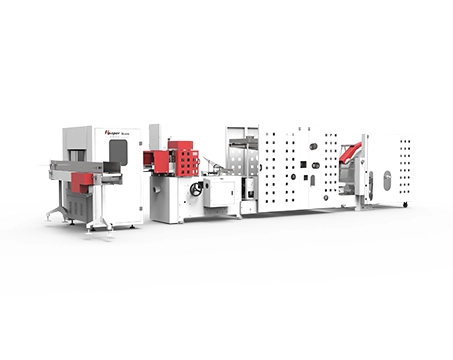
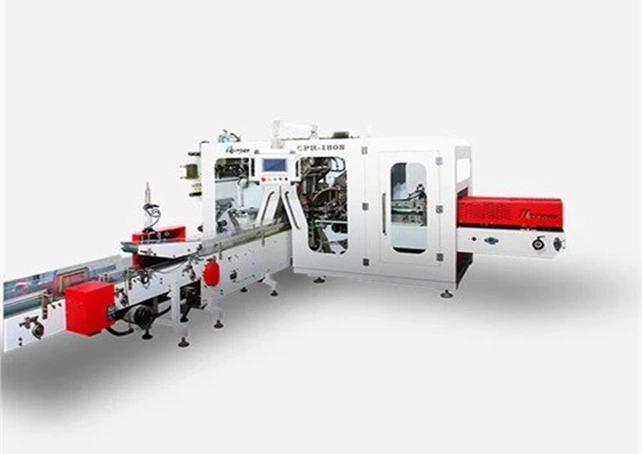
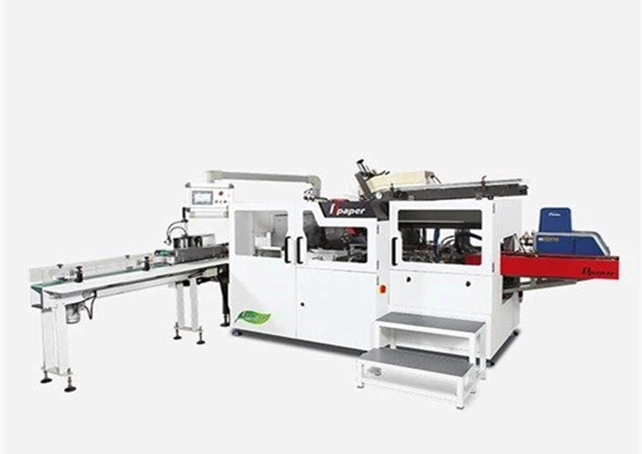
The most competitive plants are shifting toward fully integrated production, where the folding and stacking units communicate seamlessly with the napkin packing machine to produce sealed, shelf-ready packs with minimal manual intervention.
E-E-A-T note: At One Paper Group, our teams have spent decades observing global factories transition from manual packing to semi-automation—and now to Industry 4.-ready, fully automated packing lines that prioritize OEE, stability, and consistency over “headline speed.”
Integrated production is a continuous, synchronized flow from raw tissue paper roll to finished, packaged product—without the stop-start friction of manual handling. In practical terms, it means your converting line and your packaging line operate as one coordinated system.
Core elements of tissue integrated production typically include:
Synchronized speed control between folder/stacker and downstream packaging throughput
Computerized counting to ensure consistent pieces-per-pack
Automatic film feeding with stable tension control for PE/PP/BOPP film
Sensor-based detection to prevent misfeeds and jams before they escalate
PLC touch screen control for recipe management, alarm history, and rapid changeovers
Instead of relying on operators to “bridge the gap,” an integrated line uses data, sensors, and control logic to keep the flow continuous and predictable.
In modern manufacturing, labor cost, labor availability, and turnover have become some of the highest operational pressures—especially for repetitive packaging tasks. Semi-automatic packing often requires operators to:
Position bags or film manually
Correct skewed stacks
Rework inconsistent seals
Stop the line to remove mispacks
A fully automated packing line reduces those touchpoints dramatically. With automatic film handling, controlled sealing, and consistent counting, you can achieve near-identical pack presentation—shift after shift, operator after operator.
Expert tip: Automation isn’t only about “cutting headcount.” The bigger win is upskilling your best people away from repetitive physical work and toward tasks that protect margin—quality audits, preventive maintenance, and process improvement.
Pro Tip (Real-World Experience):
In our experience supporting plants in Southeast Asia and Europe, switching from semi-auto packing to integrated napkin packaging solutions reduced packaging waste by around 12% within the first six months—primarily by eliminating rework and film overuse during manual correction.
High-speed packaging is meaningless if your reject rate rises, your jam frequency increases, or your sealing quality becomes inconsistent. Many lines can reach impressive BPM on paper—but the real KPI is stable output over long runs.
This is where modern automation technologies matter:
Servo-driven systems allow precise timing and motion control at high speeds, improving repeatability for film feeding, pack forming, and cutting. The result is more consistent pack length, tighter tolerance control, and fewer “drift” issues during extended runs.
With PLC-based control logic and a PLC touch screen control interface, operators can manage recipes, change pack counts, tune sealing parameters, and review alarms without guesswork. This makes your packaging process less dependent on tribal knowledge.
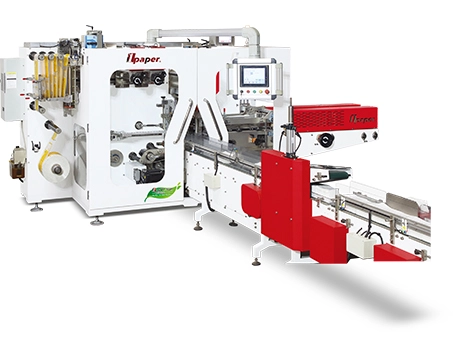
A modern napkin packing machine uses sensors to detect misaligned stacks, missing product, or abnormal film tension before they turn into a jam. Instead of chaotic stoppages, the system can trigger controlled slowdowns, reject routines, or alarms that protect downstream equipment.
Bottom line: The goal isn’t just “fast.” It’s fast and predictable—so your line achieves higher OEE and lower downtime over a full shift.
Packaging film is not a small expense in high-volume tissue production. Integrated machines can reduce waste by optimizing:
Film length control (less overwrap)
Film tension stability (fewer wrinkles and seal failures)
Cut accuracy (less scrap during transitions)
Just as important: packaging is increasingly “people-first.” Consumers and retailers are pushing for less material, better presentation, and more consistent seals. Automation makes it easier to run thinner, high-performance films—the type that can be difficult to handle manually but is ideal for precise automated systems.
And with refined heat sealing technology and controlled dwell parameters, integrated systems can maintain seal integrity while reducing rework—another hidden source of plastic waste.
Industry 4. isn’t a buzzword when it directly improves uptime and decision-making. Smart industrial napkin packaging solutions increasingly include:
Remote monitoring for alarms, line status, and performance checks
Data analytics to identify recurring stops and micro-downtime
OEE tracking (Overall Equipment Effectiveness) in real time
Downtime reason logging to convert “opinions” into actionable facts
For production managers, this means fewer blind spots. Instead of reacting to breakdowns, you can spot trends—like a specific film roll type causing seal variability, or a certain shift seeing higher misalignment events—and correct the root cause.
Use the table below as a practical snapshot when evaluating a high-speed tissue wrapper or fully automated packing line.
| Factor | Semi-Automatic Packing | Fully Integrated Production |
|---|---|---|
| Speed (BPM) | Moderate-to-high, but often interrupted | High with stabilized flow and fewer stops |
| Labor Required | Higher (manual handling, corrections) | Lower (operators focus on QC and oversight) |
| Film Waste % | Higher (rework, overwrap, misfeeds) | Lower (optimized film feeding and cut control) |
| Error Rate | More variation across shifts/operators | More consistent packs through sensors + PLC logic |
Integrated production isn’t just an upgrade—it’s rapidly becoming a requirement for tissue manufacturers who want reliable throughput, stable quality, and predictable costs.
When you calculate the true cost of not automating—labor turnover, packaging waste, downtime, inconsistent seals, rejected packs, and constrained packaging throughput—the ROI equation changes. The initial CAPEX of a high-quality integrated system is often outweighed by the ongoing operational savings and higher line stability.
Ready to eliminate your production bottlenecks? Explore One Paper Group’s range of fully automated napkin packing machines or contact our engineers for a custom line consultation.
Speed depends on pack format, film type, count per pack, and upstream stability. In practice, the best KPI is stable output (high throughput with low stops and low reject rate), not peak BPM for a short run.
Most modern systems are designed to run common packaging films such as PE/PP/BOPP film, depending on your pack style and sealing requirements. Film thickness and finish should match your heat sealing technology and pack presentation goals.
Often, yes—if the folder/stacker can provide consistent stack presentation and supports synchronization signals. A retrofit typically involves mechanical interface alignment plus electrical/controls integration (PLC communication and sensor coordination) with downstream equipment.
Focus on OEE drivers: sensor strategy to prevent jams, servo stability at speed, PLC recipe management, sealing consistency, film waste control, and service/support for commissioning and training.