+86-18815018869
  josie@one-paper.com
+86-18815018869
josie@one-paper.com
josie@one-paper.com
+86-18815018869
josie@one-paper.com
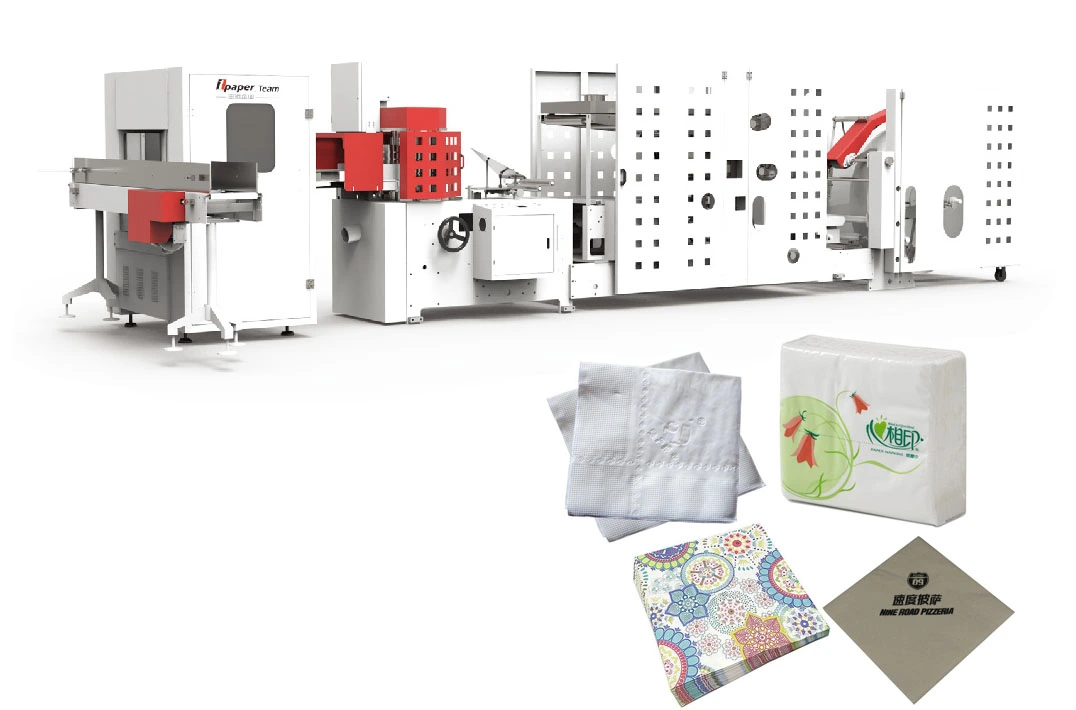
The napkin folding machine is an essential asset in the paper production line, designed to convert raw paper into perfectly folded napkins at an accelerated pace. Its precision engineering ensures uniformity in size and shape, significantly enhancing the efficiency of the production process and the quality of the final product.
Choosing the right napkin folding machine for your business involves considering several key factors to ensure efficiency, productivity, and cost-effectiveness. Firstly, assess the volume of production your business requires. High-volume establishments will benefit from fully automatic, high-speed machines capable of handling large quantities efficiently, while smaller operations might opt for semi-automatic or manual folding machines. The type of napkin fold desired is also crucial; different machines offer various fold types such as single, double, or custom folds, so select one that aligns with your product offering.
Additionally, consider the napkin machine's compatibility with different napkin sizes and material types to ensure versatility and the ability to meet diverse customer needs. The machine's footprint is another important aspect, especially for businesses with limited space; compact machines that don’t compromise on productivity can be ideal. Lastly, evaluate the machine's ease of operation, maintenance requirements, and energy efficiency to minimize operational costs and downtime. By carefully assessing these factors, businesses can select a napkin folding machine that not only meets their current needs but also accommodates future growth and expansion.
Maximizing productivity in the napkin production industry hinges on leveraging advanced napkin folding machines—alongside the high-performance sanitary napkin packing machine—that embody efficiency, speed, and versatility. Modern machines are designed to operate at high speeds, significantly reducing the time it takes to fold napkins, which directly translates to higher output rates and the ability to meet increased demand swiftly. These advanced models come equipped with user-friendly interfaces, allowing operators to easily adjust settings for different napkin sizes and fold styles, catering to a wide range of customer preferences without sacrificing speed or quality.
Moreover, the integration of automation and smart technology in these machines minimizes manual intervention, reducing the likelihood of human error and ensuring consistent product quality. Features such as automatic counting and stacking streamline the production process further, enabling a seamless transition from folding to packaging. Energy efficiency is another critical aspect, with newer models designed to consume less power, thereby lowering operational costs. By investing in advanced napkin folding machines and the high-performance automatic napkin making machine, businesses can achieve a competitive edge through the enhanced productivity, adaptability, and cost-effectiveness of the automatic napkin making machine, positioning themselves as leaders in the market with the support of the automatic napkin making machine.
Automatic Napkin Folding Machines: Fully automated models designed for high-volume production with minimal manual intervention.
Semi-Automatic Folding Machines: Allow some manual customization while automating most of the folding and processing steps.
Manual Napkin Folding Machines: Mechanically assisted devices perfect for smaller-scale operations.
Depending on your business needs, you can choose between machines tailored for paper napkin folding or cloth napkin folding, ensuring compatibility with your preferred material.
When evaluating napkin folding machines for your business, focus on the features that align with your production needs and goals. Here are key factors to consider:
Folding Speed: High-speed machines can produce thousands of perfectly folded napkins per hour.
Material Compatibility: Choose a machine that handles your preferred material, whether it's paper or cloth.
Ease of Use and Maintenance: Opt for a user-friendly machine that doesn't require extensive training or upkeep.
Energy Efficiency: Modern machines are designed to consume less energy while delivering high performance.
Looking for high-quality options? Check out the ONEPAPER's Napkin Machines to explore top-of-the-line equipment tailored to your business.
Investing in a napkin folding machine offers numerous benefits for businesses aiming to optimize their workflows:
Cost-Effectiveness: Reduce reliance on manual labor and scale operations without extra workforce expenditures.
Enhanced Hygiene: Particularly critical for disposable napkin tissue folding machines, which eliminate direct handling by staff.
Consistency and Scalability: Uniformly folded napkins boost brand presentation, while scalable production meets growing customer demands.
Napkin wrapping machines bring significant value to a variety of industries:
Foodservice: Restaurants, cafes, and catering services benefit from quick, uniform napkin production, especially for high-volume events.
Hospitality: Hotels and event venues elevate guest experiences with perfectly folded cloth napkins.
Manufacturing: Paper napkin producers streamline operations while meeting the demands of wholesalers and retailers.
If your business falls into one of these categories, you're bound to benefit from the efficiency of a reliable napkin wrapping machine.
Selecting the right napkin folding machine requires a thoughtful evaluation of your operational requirements. Here are some factors to compare:
Folding Speed: High-speed units are ideal for manufacturers, whereas small-scale operations might not need the extra capacity.
Material Compatibility: Ensure the machine is equipped to handle your type of napkin—be it paper or cloth.
Brand Reputation: Machines from trusted providers like One Paper Group often offer better reliability and after-sales support.
Explore detailed options on One Paper Group's napkin folding machines page to ensure an informed decision.
Even the most advanced napkin machines require upkeep to operate at full capacity. Here are some common troubleshooting tips:
Problem: Napkins are misfolded or jammed.
Solution: Check for improper material placement or recalibrate the folding settings.
Problem: Machine is running slower than usual.
Solution: Perform routine cleaning and inspect key components for wear and tear.
Tip: Schedule regular maintenance to prevent costly downtime and improve longevity.