+86-18815018869
  josie@one-paper.com
+86-18815018869
josie@one-paper.com
josie@one-paper.com
+86-18815018869
josie@one-paper.com
High-capital investments, like purchasing a tissue machine, represent a critical decision for plant managers and operations teams in tissue manufacturing facilities. With the ever-increasing market demand for speed, precision, and sustainability, choosing the right tissue machine manufacturer in 2026 is more complex and more important than ever. This guide is your ultimate roadmap to navigating the saturated market and evaluating your options with confidence.
The tissue manufacturing industry has dramatically transformed over the past decade. By 2026, automation is no longer optional—it's an essential baseline. Rising labor costs, growing global tissue consumption, and the transition to high-speed, high-efficiency production lines have compelled manufacturers to adopt cutting-edge, fully automated solutions.
For businesses seeking to stay competitive, investing in advanced automatic facial tissue machines is no longer an add-on—it's a necessity. But, with so many tissue machine manufacturers vying for attention, how can you differentiate between a high-quality producer and a low-cost assembler?
A sub-par machine can lead to frequent breakdowns, reduced productivity, or avoidable maintenance costs. Selecting a reliable tissue machine manufacturer is not just about the machine you purchase but also the support, innovation, and operational efficiencies that come with it.
This guide is designed to demystify the shopping process and help buyers establish a technical, experience-driven selection framework based on decades of engineering benchmarks and real-world production experiences.
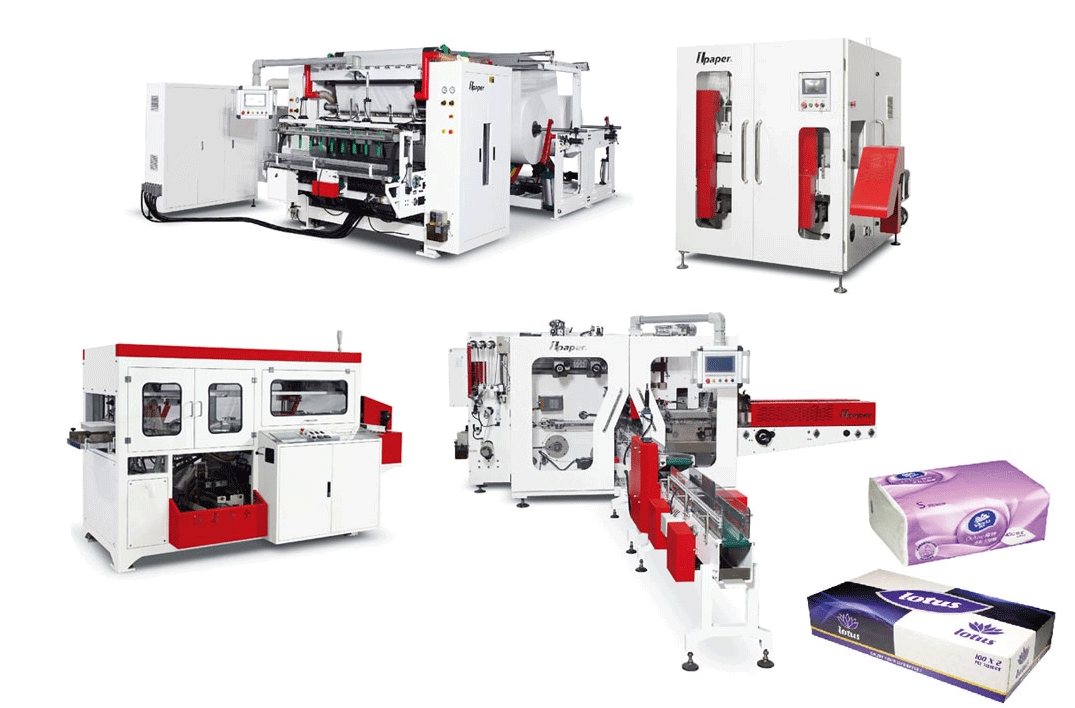
The technical specifications of a tissue machine are the foundation of its ability to meet your production requirements. While buzzwords like "high-speed" and "precision engineering" are often used, it’s important to dig deeper into the hardware details. Below are key components and qualities to evaluate in 2026:
Tissue machines often specialize in different folding types, including V-fold, N-fold, and M-fold. Each folding type serves distinct product requirements, and a versatile machine will allow manufacturers to meet evolving customer demands with ease. If your business caters to multiple tissue formats, prioritize machines that can handle multiple folding styles without significant downtime for reconfiguration.
Modern high-speed machines (200m/min and beyond) require robust structural engineering. Machines with a heavier frame and high-grade alloy components are less susceptible to vibration, enhancing production stability and lifespan. Ask detailed questions about the frame materials and check the specifications before making a decision.
In 2026, advanced tissue machines rely on independent motor drives and automated tension control for seamless paper unwinding. Look for solutions that utilize magnetic powder tension control, which reduces the risk of paper breakage by up to 18%, helping you meet production quotas without interruptions.
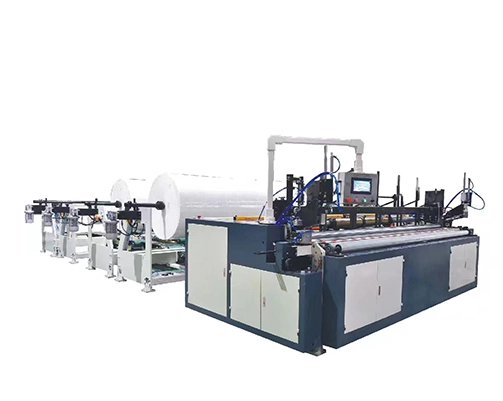
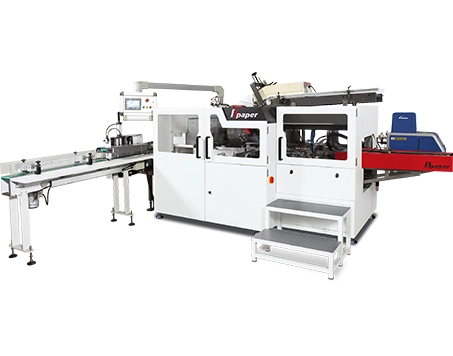
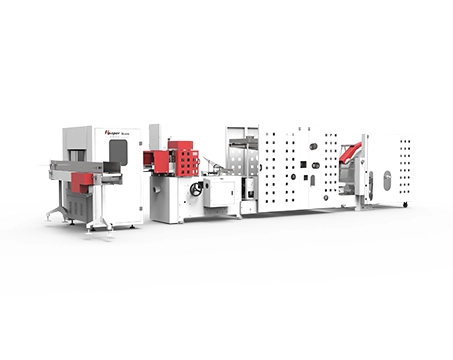
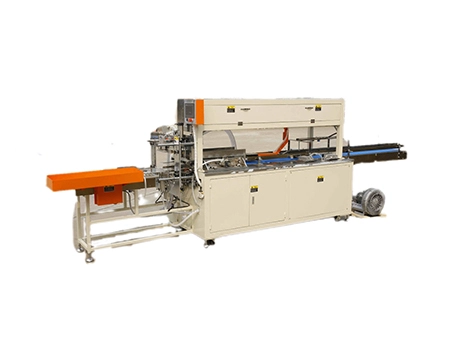
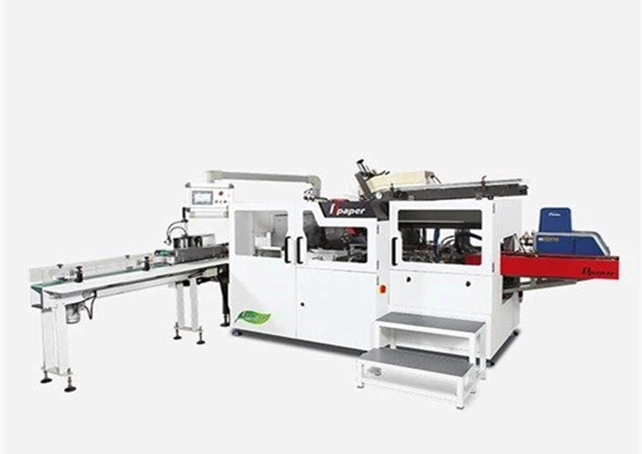
Learn how these features come to life in the OnePaper automatic facial tissue machine series.
In 2026, tissue machines are more than heavy equipment—they're essential components of a smart factory. Programmable Logic Controllers (PLCs), powered by technology from industry leaders such as Siemens and Delta, serve as the “brains” of the modern tissue production line. PLCs ensure precise synchronization between different sections of the machine, reducing errors and optimizing performance.
Machine operators in 2026 require intuitive, user-friendly interfaces that allow for remote diagnostics, parameter adjustments, and IoT connectivity. A state-of-the-art interface minimizes human error and supports proactive maintenance, reducing costly downtime. Be sure to inquire about the robustness of the HMI system when evaluating potential suppliers.
No modern automatic facial tissue machine is complete without zero-speed splicing. This feature ensures seamless roll changes without halting the production line, boosting efficiency and workflow continuity.
When committing to a high-capital purchase like a tissue machine, partnering with the right manufacturer can make or break your ROI. This checklist highlights critical factors to assess during your supplier evaluation.
Does the manufacturer focus on innovation? Leading tissue machine manufacturers hold patents and invest heavily in R&D to enhance machine performance, reliability, and sustainability. Avoid suppliers who simply replicate existing designs without offering meaningful improvements.
When a machine malfunctions, speed matters. Evaluate the manufacturer’s after-sales support by asking about their Mean Time to Repair (MTTR). Top-tier suppliers provide features like 24/7 remote troubleshooting, ready access to spare parts, and robust customer service support.
Ensure the machines meet critical industry certifications, such as CE, ISO 9001, and UL standards. These certifications demonstrate the seriousness of the manufacturer regarding quality, safety, and regulatory compliance.
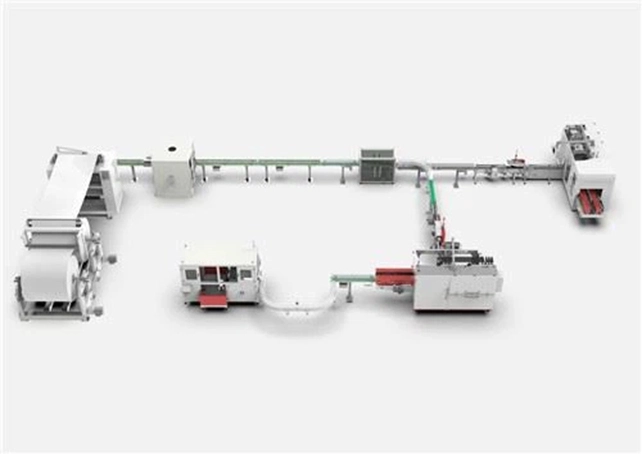
Consider manufacturers that offer a fully integrated solution, including folding, cutting, and packaging, rather than piecing together machines from different suppliers. Comprehensive solutions reduce compatibility issues, streamline production, and deliver stronger long-term ROI.
In 2026, buyers must weigh operational expenditure (OPEX) and capital expenditure (CAPEX) when evaluating a tissue machine’s total cost of ownership. Machines that are slightly more expensive upfront can save significant costs over time if they are designed with efficiency in mind.
Energy-efficient motors, such as IE3 or IE4-rated models, can substantially reduce power consumption without sacrificing performance. Verify whether the machine includes vacuum suction systems designed to minimize energy usage during the production process.
Reduced material waste directly improves margins. Look for machines equipped with precision cutting technology and "paper-end" sensors to minimize paper consumption. Industry benchmarks now demand paper waste rates of less than 1-2%.
The decision to invest in a new automatic facial tissue machine impacts not only the immediate output but also your factory’s profitability for years to come. When evaluating tissue machine manufacturers, prioritize durability, innovation, and long-term efficiency over short-term cost savings.
If you're ready to learn more about how OnePaper Group’s cutting-edge tissue machines can future-proof your production line, we invite you to explore our product portfolio.
By applying this framework, procurement teams can confidently select a machine that not only aligns with their technical requirements but also ensures cost-effective and sustainable production for years to come. Remember: It's not just about buying a machine—it's about securing a production advantage in the competitive tissue market of 2026.# Markdown syntax guide