+86-18815018869
  josie@one-paper.com
+86-18815018869
josie@one-paper.com
josie@one-paper.com
+86-18815018869
josie@one-paper.com
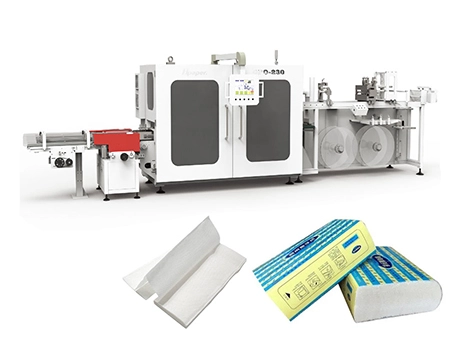
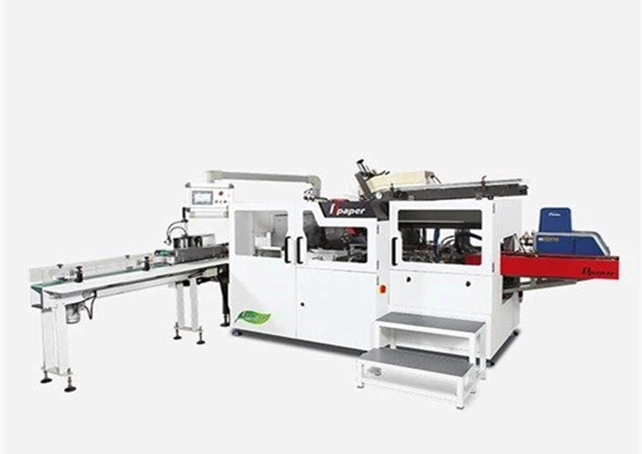
Facial tissue equipment must create a consistent interlock so one sheet presents the next through a carton or soft pack. Fold accuracy depends on parent tissue, slitting, web tension, folding geometry, vacuum, counting, and transfer to cutting/packing.
Terms such as V-fold and interfold are sometimes used broadly. The buyer should approve a physical finished sample, sheet/fold drawing, and dispensing test rather than rely on naming alone.
| Specification | Why it affects the machine |
|---|---|
| Open/folded sheet size | Folder width, slitting, and pack dimensions |
| Ply and basis weight | Web handling and finished stack height |
| Sheet count | Counting, cutoff, and pack cycle |
| Emboss/lamination | Thickness, bonding, and web stability |
| Pack opening | Pop-up continuity and presentation |
| Printed/lot coding | Registration and downstream interfaces |
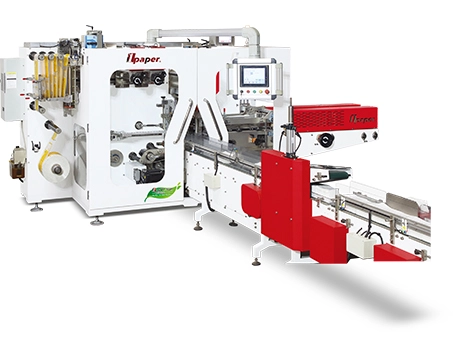
Onepaper facial tissue folding machines should be configured from the finished SKU and parent-roll matrix. A nominal line speed does not show pop-up or count quality.
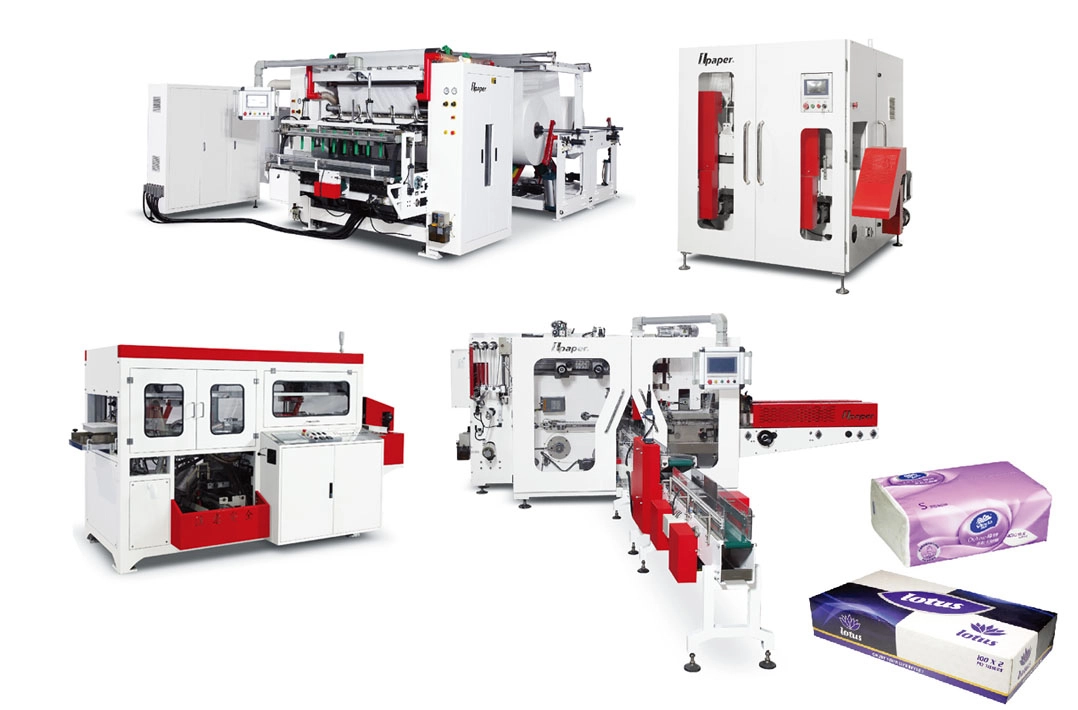
Parent rolls need stable tension, alignment, and slitting. Variations in tensile, moisture, or winding hardness can cause wrinkles, breaks, and uneven edges. If several plies are combined, synchronize them without excessive stretch.
Record parent-roll range and change procedure. Automatic splicing can raise availability only if splice quality and downstream detection are controlled.
Folding-roll/plate geometry and timing
Vacuum stability, filtration, and air consumption
Count accuracy at normal and maximum stable speed
Log/stack separation without crushing or losing interlock
Transfer synchronization to cutting and packing
Reject handling that does not mix incorrect-count packs
Quality should be sampled across machine lanes and through the parent roll. One central sample can miss lane-specific tension or fold errors.
List which changes require tools or hardware: sheet length, slit width, count, emboss pattern, pack format, and printed film. Separate recipe-setting time from mechanical conversion and sanitation. Use marked adjustment points and saved recipes where appropriate.
Measure from last good pack of SKU A to first sustained good pack of SKU B. A trial that stops at ‘machine running’ excludes adjustment waste and quality stabilization.
Run approved parent tissue and packaging for a named SKU.
Measure sustained good packs, not empty cycles.
Check sheet size, count, fold alignment, emboss, and pop-up continuity.
Record breaks, stops, waste, and lane-level defects.
Perform one representative SKU changeover.
Verify guarding, alarms, recipes, manuals, and spare parts.
Sheets overlap so pulling one presents the next. The exact fold geometry should be defined by drawing and sample.
Fold overlap, sheet friction, count compression, pack opening, tissue properties, and transfer damage can contribute.
Use sheets/minute, logs/minute, or good packs/minute for a named SKU and operating condition; do not compare different units directly.
Slitting, tension, vacuum, and fold alignment can vary across machine width, creating lane-specific defects.
Onepaper can review parent-roll and finished-pack samples for line configuration. Acceptance should prove dispensing, count, appearance, output, and changeover performance across the line.