+86-18815018869
  josie@one-paper.com
+86-18815018869
josie@one-paper.com
josie@one-paper.com
+86-18815018869
josie@one-paper.com
A tissue folding machine is the core equipment in facial tissue and soft pack tissue production. It determines fold accuracy, sheet alignment, stack quality and the stability of downstream packing. Understanding how the machine works helps buyers choose the right model for V-fold, interfold and high-speed tissue converting projects.
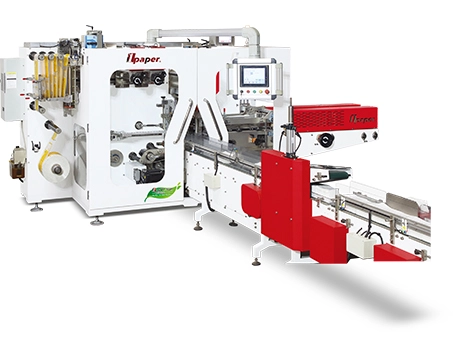
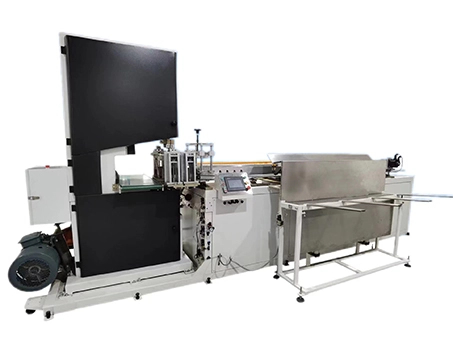
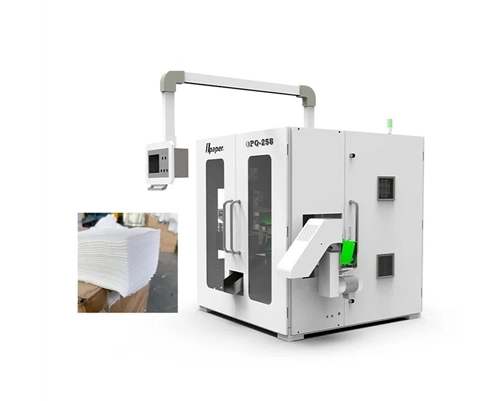
A tissue folding machine unwinds jumbo rolls, slits the paper into required web widths, guides the web through folding plates or vacuum-assisted folding systems, cuts the sheets and stacks them into a continuous interfolded tissue stack. The finished stack can then be transferred to cutting, compressing and packing equipment.
The working principle sounds simple, but stable production requires precise tension control, accurate paper guiding, reliable folding timing and clean cutting. Any instability in the folding section can cause crooked stacks, broken sheets or packing problems.
Unwinding controls the parent roll and web tension.
Slitting divides the paper into the correct lanes.
Folding creates V-fold or interfolded tissue sheets.
Cutting and stacking prepare the product for soft pack or box tissue packaging.
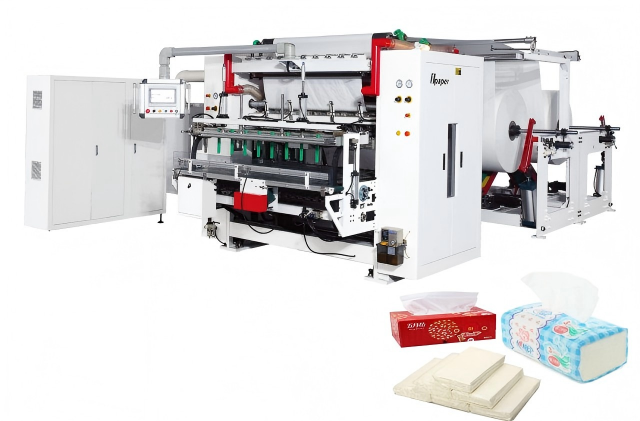
V-fold tissue is folded into a V shape so the next sheet is pulled up when one sheet is taken from the pack. Interfolding improves dispensing convenience and is widely used in facial tissue, boxed tissue and soft pack tissue products.
For buyers, the key question is not only whether the machine can make V-fold tissue, but whether the finished sheet size, stack height and dispensing performance match the target pack design.
V-fold is common for facial tissue and soft pack tissue.
Interfolding improves sheet-by-sheet dispensing.
Accurate folding reduces waste and improves consumer experience.
Folding quality depends on paper softness, tensile strength, moisture level, web tension and machine adjustment. Low-quality paper can tear during high-speed folding, while unstable tension may create misaligned sheets. A good facial tissue folding machine should be able to keep stable output across the recommended paper specification range.
Buyers should ask for test production using paper similar to their local supply. A machine tested only with ideal paper may not perform the same with different GSM, embossing depth or softness.
Paper GSM and parent roll quality.
Tension control and web guiding accuracy.
Folding plate design or vacuum folding stability.
Blade sharpness and cutting system maintenance.
Operator training and size changeover procedure.
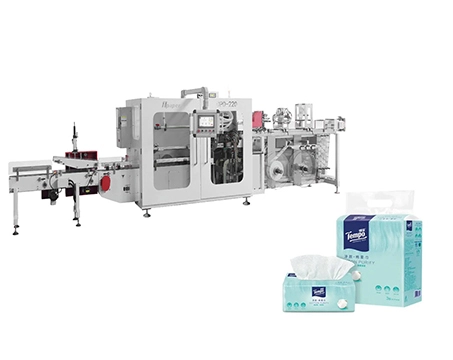
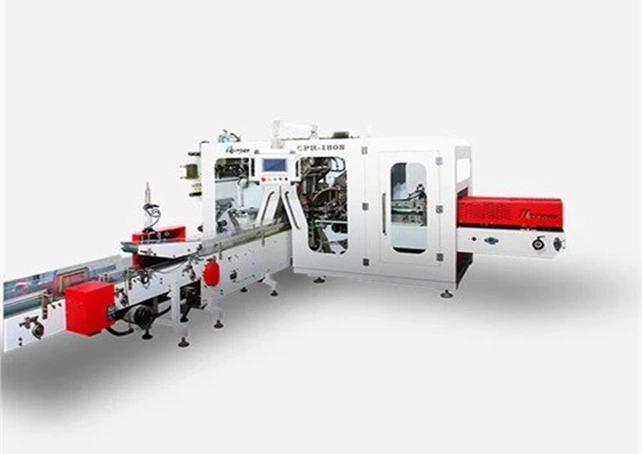
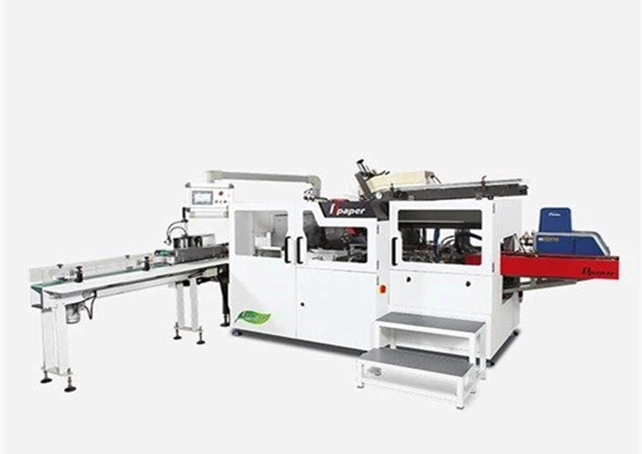
The folding machine should be selected together with the packing plan. If the tissue stack height is not stable, the wrapping machine or bagging machine may produce loose packs, wrinkles or sealing problems. In high-speed lines, automatic transfer between folding and packing is important for reducing labor and avoiding stack deformation.
When planning a complete facial tissue production line, buyers should define the finished pack first, then design the folding, cutting, compressing and packing sections around that pack.
Confirm tissue sheet size and stack count before machine selection.
Check whether the output direction matches the packing machine layout.
Plan enough buffer space between folding and packing when required.
Routine maintenance keeps folding accuracy stable. Operators should inspect blades, belts, bearings, paper guiding parts and dust accumulation. Tissue converting creates paper dust, so cleaning is not only a hygiene step but also a performance requirement.
A reliable supplier should provide training, spare parts guidance and troubleshooting support for common issues such as uneven stacks, sheet breakage, poor dispensing and unstable counting.
Keep blades sharp and replace them before burrs appear.
Clean paper dust from sensors and moving parts.
Record settings for each SKU to reduce changeover time.
A tissue folding machine can make facial tissue, soft pack tissue, boxed tissue and interfolded tissue products, depending on the machine design and downstream packing configuration.
Uneven tissue stacks can come from unstable web tension, paper quality variation, blade wear, incorrect folding adjustment or poor transfer between folding and packing machines.
If you already have packing equipment and operators, a folding machine may be enough. If you want higher output and lower labor cost, a complete folding, cutting and packing line is usually more efficient.
Provide your tissue sheet size, parent roll width, stack count and packing method to get a folding machine layout and technical recommendation for your production line.